Posts

Showing posts with the label Windows XP

Solved: iertutil.dll was not found error

After so many years, Microsoft started to phase out IE6 and started rolling out Internet Explorer 8 update . But many people experienced a problem after the compulsory IE8 windows update. Their Windows computers won't boot, instead it shows this error: bcmwltry.exe/explorer.exe - Unable to Locate Component This application has failed to start because iertutil.dll was not found. Re-installing the application may fix this problem.  The ordinal 681 could not be located in the dynamic link library iertutil.dll This error is caused by an improper installation of Internet Explorer. You can try this solution to fix this problem: 1. Press CTRL + ALT + DEL when you see the error. 2. With the Task Manager running, click File then New Task , type CMD then press enter. 3. A black window will open, this is the command prompt. Type these commands (press enter after each command): ren c:\windows\system32\dllcache\iertutil.dll iertutil.old copy c:\windows\system32\...

Solution: Mouse and/or Keyboard not Working after Deleting Upper/Lower Filter in Registry

Image
Scenario : Mouse and/or Keyboard not working after deleting entries in the Windows Registry (regedit) to fix CD/DVD problem (Upper and Lower Filters) Reason : There are three entries of Upper and Lower Filters in the registry. The first entry is for the CD ROM. This is the only entry you will need to delete in order for your optical drive to work. The second and third entry is for the keyboard and mouse and you should not delete it or your mouse/keyboard will not work at the next restart. Screenshots: Original upperfilters entry Mouse: Keyboard: Solution/s: System Restore can do the trick but obviously you cannot do it because your keyboard and/or mouse is not working. You can try this method instead: Restart your computer and before the Windows XP logo shows, repeatedly press F8. Choose Last Known Good Configuration . Try this several times if it doesn't work the first time. Or if you're just like me ( keyboard is working, mouse not ), navigate through the reg...

How to Disable Error Reporting in Windows XP

Image
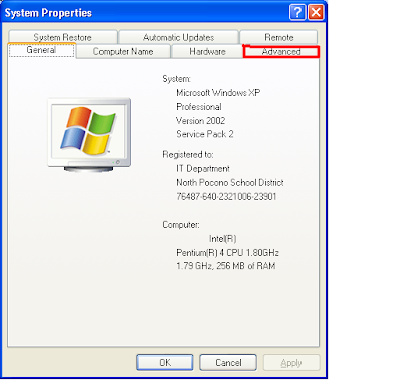
Follow these steps on how to disable error reporting in your Windows XP machine. 1. First, right-click the My Computer icon in the Start menu. 2. Next, select Properties to open up the System Properties window. 3. Now, select the Advanced tab. 4. Then, under the Advanced tab, click the Button that reads Error Reporting at the bottom of the application. The Error Reporting window should now appear. 5. Next, select the item that reads Disable Error Reporting. Although you are choosing to eliminate all error reporting, you will still be notified when critical errors occur as long as you keep the box checked that says “But notify me when critical errors occur” under the item: Disable error reporting. 6. Finally, click OK to exit the window and then click OK again to exit the System Properties window. That’s it! You should not receive those annoying error messages again, but will still receive the critical ones. Have fun!

How to Change Password on Windows XP / 7 without knowing the Original Password

Image
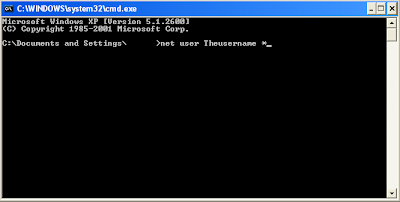
This is useful for many occasions such as if you forget the password to your primary account on your computer but still have access to another 0ne or if you simply want to prank your brother. This has been tested on both Windows XP and Windows 7. For this to work you must have access to another account because you have to use Command Prompt or CMD to change the password. Here is how to do it: Open Command Prompt (CMD) by going to Start -> Run -> cmd.exe Type in ‘net users’. This will show you a list of all the accounts on the computer. This is just to check and make sure you know the EXACT username of the account you want to change the password for. Next, you need to type in ‘net user (whatevertheusernameis)  Next you shall get a prompt asking you for the new password: Finally it shall ask you to repeat the new password, click enter and BAM, you have now changed the password without knowing the original one.

How to Use the System Restore Function of Windows XP

Well, we all have been there. We turn on our computer (boot up) getting ready to type that school report, or business presentation and guess what, our computer just does not want to work today. Whether it's the word processor, spreadsheet, or financial package that isn't working, most people do not know that Microsoft Windows XP has a built in feature that just may come and save the day. That feature is called "System Restore." Basically, System Restore is like a little hound that runs behind the scenes taking "snapshots" of various parts of the Microsoft Windows XP operating system. So, if a part of Microsoft Windows XP stops working one day, the System Restore utility is able to reference one of the "snapshots" it took and restore your system from a previous day (a day when your computer worked). It's kind of like going back in time to a day when your computer worked. All your current data (Microsoft Word files, etc.) are still retained, so...

Windows XP and Advanced Power Management (APM) Support

This post describes how Windows XP installs Advanced Power Management (APM) support. Windows XP supports the following two methods of power management: Advanced Configuration and Power Interface (ACPI) Advanced Power Management (APM) ACPI is the preferred method for controlling power management. When ACPI support is not installed, Windows XP installs APM when any of the following situations occur: 1. The computer appears in the Auto-Enable APM list section of the Biosinfo.inf file. The computer passed APM tests and should work with APM. The APM tab is present and enabled in the Power Options tool in Control Panel. 2. The computer appears in the Disable APM list section of the Biosinfo.inf file. The computer is tested and found to have problems with APM. The APM tab is not present in the Power Options tool in Control Panel. 3. The computer does not appear in either of the lists, and is considered neutral. The computer is not tested for APM support in Windows XP. The APM tab is present i...

How To Hack Computer Password In Windows XP All Service Pack

Hacking is crime but hackers are never stop the hacking. When we hack the computer password it is not a big hacking but it is take some place of hacking. People always search about how to hack computer password, how to recover my computer password, how to hack password of win. xp and more search about this topic. Now i give the simple way to hack the password of windows xp all service pack. 1) click on the “Start Button” and click “Run” after that type the “cmd” without the quotes. Type net user then press enter After this process type “Net user [Username of Account]*” then press Enter, without the quotes["], and quotes. Make sure spell of the username is correctl, and you have the ‘*’. To change password press enter. 2) When you are Logged out of the computer and cannot figure out the password at the start up screen, do the following steps for hack the password: Restart the computer and toggle (continue press) the F8 button. You found a screen that will ask you if you want to...

How to Unlock / Unhide / Show the Administrator Account in Windows XP

Image
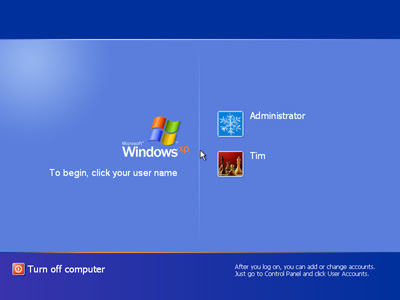
In every installation of Windows XP there is a built-in and default administrator user account named Administrator, which is equivalent to super user or root in Unix system. However, if you have set up another user account in Windows XP, the Administrator account will be hidden, cloaked and invisible in User Accounts or Computer Management. Now the Question is How to Unhide it? To see the Administrator account, you have to Boot Windows in Safe Mode. However, you can modify the Windows registry so that the Administrator account will be shown at Windows XP Welcome screen for you to select, in the Control Panel’s User Accounts and in the local user lists in Computer Management. Steps: 1. Launch Registry Editor. 2. Navigate to HKEY_LOCAL_MACHINESOFTWAREMicrosoftWindows NTCurrentVersionWinlogonSpecialAccountsUserList in the Registry Editor. 3. Double-click the Administrator key in the right pane. 4. If the Administrator key doesn’t exist, right-click on the above tree in the pane, choose Ne...

Enable Administrator Account in Vista and XP

A step-by-step tutorial on how to enable the built in Administrator account. This works on XP and Vista. Do not use on any computer but your own. Alright so you have a problem with your computer or you just can not change anything within your computer because of inadequate privileges. For months I searched for the solution and I finally found it while scrounging around. I will teach you exactly what I had done to make this work. Alright so you want to create a Live CD and place TRK on that CD. The link for TRK (Trinity Rescue Kit) is Trinity Home.org. From their home page you want to go to the sidebar on the left and click "Download". You will be directed to a new page. Scroll down until you see the latest version of TRK and click on any of the links to download. When you click the link a yellow bar will ask your permission to download. Click on it and click "download file..." Save to your desktop and then make sure you have a CD that can be made into a live ...

Windows cannot start this hardware device because its configuration information (in the registry) is incomplete or damaged (code 19)

Image
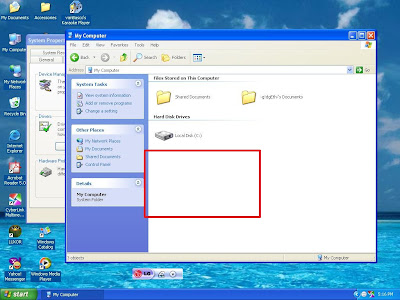
Windows cannot start this hardware device because its configuration information (in the registry) is incomplete or damaged (code 19)- CD ROM Device Manager Error One of my client brought in a Dell Latitude laptop that has a problem with its CD ROM. According to the owner he can't access his CD. The model of his CD Rom is Samsung CD ROM SN-124. Upon inspection, I found out that the device (CD ROM drive) is missing from his My Computer (as you can see on the image below) At first, I thought that the problem lies with the connection of the CDROM because I had it disassembled a week before due to display problem. The CD Rom is snap in type, so I easily took it out and back in without hassle. Upon logging in to windows, the problem still persist. Next, I checked the Device Manager (right-click My Computer, choose Properties, then Hardware and click on Device Manager). As you can see on the picture below, there is a problem with the CD ROM because there is a yellow exclamation mark befor...

Computer Keeps on Restarting while loading Windows XP

Image
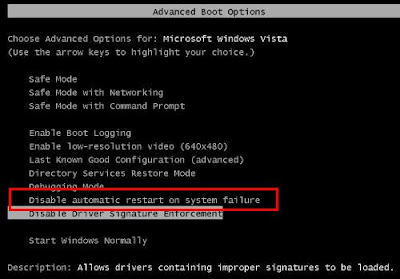
Symptoms: Computer boots like normal, Windows loading screen will appear, after a few seconds, a quick blue screen will appear and then your computer restarts. You can't even read the BSOD information because it just flash in less than a second. This will go on and on and you will be stuck in a loop. Computer will not boot even in safe mode or any other option. Solution: First thing to do is to disable the option that computer automatically restarts when a fatal error/system failure occurs. There is an option inside windows for that, but in this case we can't do that. So what you need to do is to press F8 before the Windows XP logo appears right after the BIOS screen (just like what you do when you want to boot in safe mode). This screen will appear: (this image is from Vista but it's basically the same) What you need to do is choose the option: "Disable automatic restart on system failure" (the one in the red box). After doing that, your computer will restart, an...

Disable Automatic Updates Nag Screen "Do You Want to Restart Your Computer Now"

Image
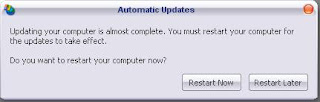
This always pops in every ten minutes or so after a successful windows update. Automatic Updates Updating your computer is almost complete. You must restart your computer for the updates to take effect. Do you want to restart your computer now? Restart Now, Restart Later But if you are in a middle of something and restarting your pc is not an option, it can become really annoying. Here's some tips to make to make it rest in peace. WinXp Pro (Not for XpHome users) 1. Start>Run 2. In the run windows type "gpedit.msc" sans quote. Group Policy will appear 3. On the left pane, navigate through Local Computer Policy > Computer Configuration > Administrative Templates > Windows Components > Windows Update. 4. On the right pane double-click on "Re-prompt for restart with scheduled installations" 5. A windows will appear. You can disable it totally, or you can set the minutes when it will prompt again. 6. Now click OK and close group policy If you are an X...